
The Workhouse Howl & 13 More Devastating Facts About Workhouses
Was the workhouse howl real?
Yes. And the circumstances that led to humans making that devastating sound are just as sad as the noise itself.
Here’s the real history of the workhouse howl, and some mind-blowing facts on workhouses in Britain.
The Origins of the Workhouse Howl: How the Workhouse System was Created
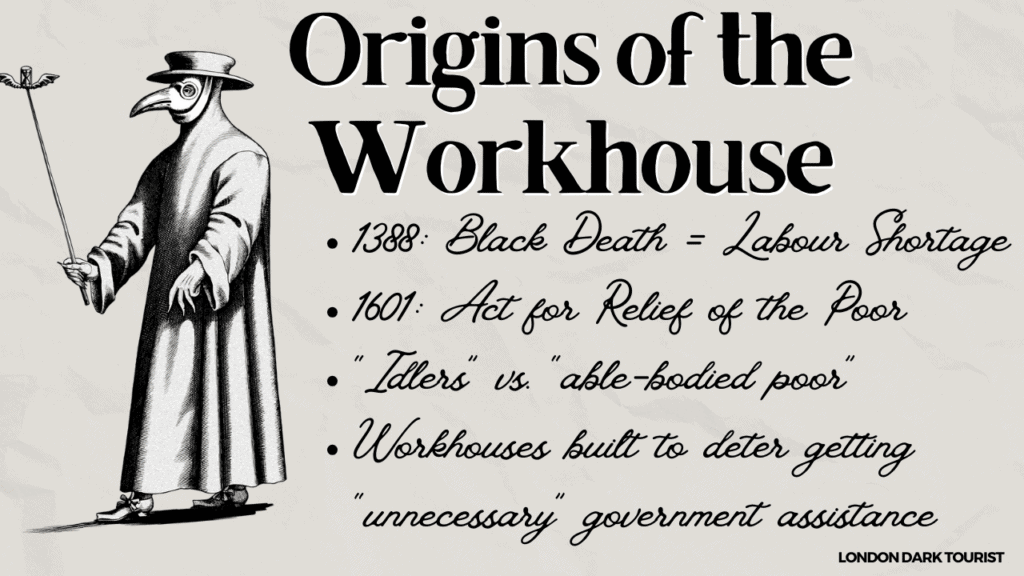
It’s 1388. After the Black Death wiped out a huge swath of the population, Britain had a labor shortage.
Prior to this, the poor were the problem of parishes and do-gooders. There was no governmental support for the needy. So when the government needed to address the labor shortage, it also became their responsibility to look after the poor.
But they didn’t want just anyone getting assistance. At this time there was a huge stigma around “idlers” – people who society thought could work, but were just too “lazy” to do so.
The government wanted to be able to distinguish between people who were genuinely poor due to circumstance, and people who were poor because they were “idlers.”
The Statute of Cambridge of 1388 was passed so the government could do just that: give opportunity to people willing to work, and pass over everyone else who was “lazy.”

In 1601, the Act for Relief of the Poor further separated “lazy” from “able-bodied”. It made individual parishes responsible for their residents, which left the parishes with a huge problem: how would they tell who really needed help and who was just lazy?
Enter the workhouse system, which grew fast and furious through the 17th & 18th centuries. If you needed help – food and a place to live – you could surrender your freedom in exchange for necessities.
This was meant to deter the “able-bodied poor” from seeking government assistance.
More laws were passed, further strengthening the workhouse system, and by 1776, there were 1,800 workhouses in England and Wales, usually in the worst and most destitute neighborhoods.
But what exactly was the workhouse, and did it do what it sought to accomplish?
Jobs in Workhouses
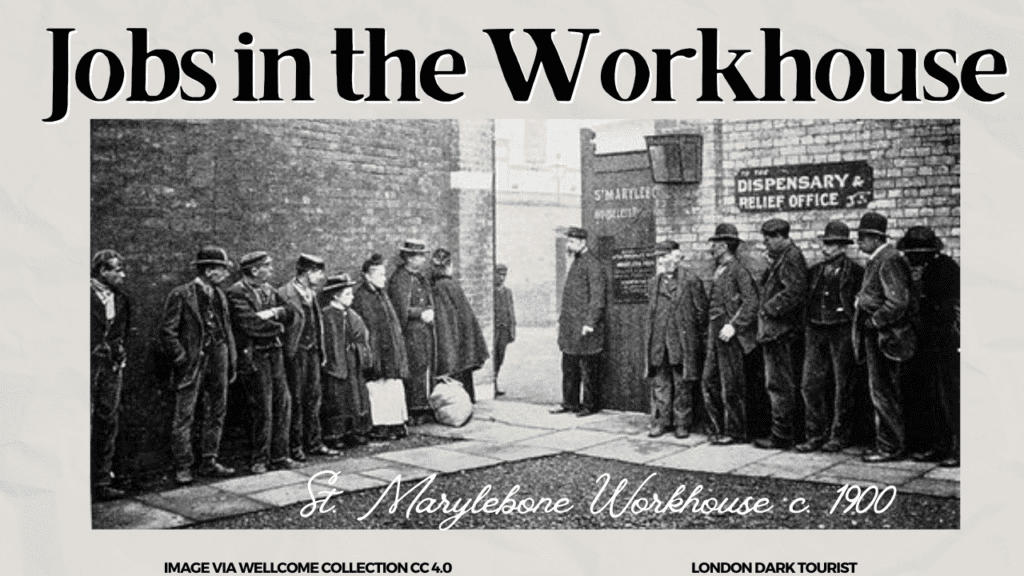
The workhouse system went like this: if you had no money, no place to live, and were struggling to eat, you could apply to a workhouse. If you were deemed eligible under the parish criteria, you could enter.
In exchange for your unpaid labor, you got to live in (usually) deplorable conditions under a strict set of rules.
Workhouses were designed similarly to prisons, and they were just as strict. In most cases, you surrendered everything you came in with and were given a color-coded uniform: yellow for “prostitutes,” red for pregnant women, and rags or sacks for those with scabies or other skin infections.
The rest wore a distinctive striped uniform that was made of rough cotton and not at all warm.
During the day, jobs in the workhouses were tedious and menial: breaking stones, picking oakum, or crushing bones for fertilizer. Many of the women were given caretaking tasks for other inmates.
Jobs in workhouses rarely taught anyone a marketable skill, which in theory should have been the goal: “rehabilitate” inmates so they could go on to rejoin society and the economy. But this didn’t often happen.
Once you checked into the workhouse, it was nearly impossible to leave for a better life. You weren’t paid for your labor, which took up your entire day, and you weren’t always allowed to leave to find paid employment.
This left workhouse residents destitute and out of options. They could stay and be miserable, or they could leave and risk death from poverty.
Facts About Workhouses
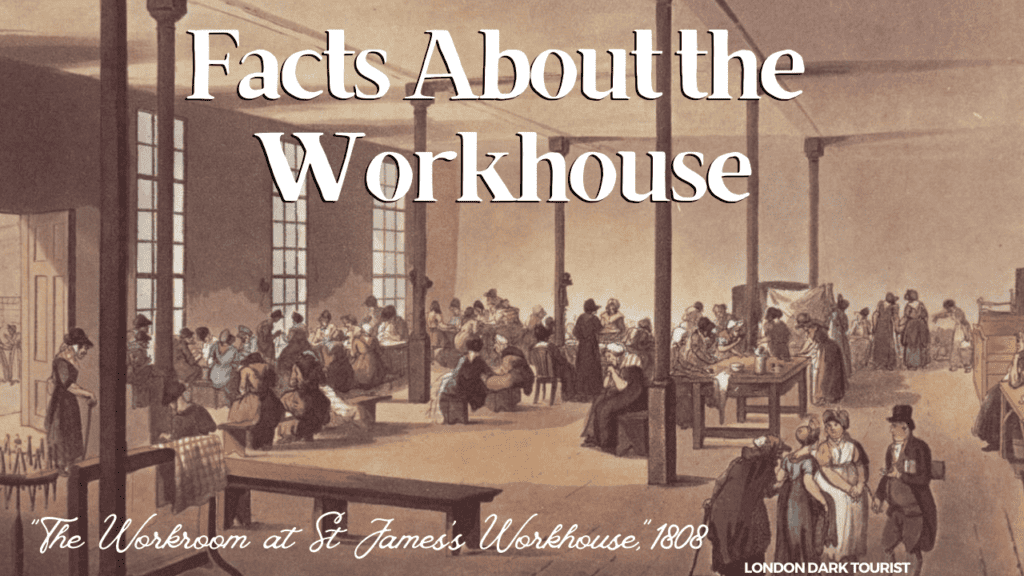
Here are some unbelievable facts on workhouses, their conditions, and what it was like to live there.
- Conditions were deliberately harsh akin to prisons to deter “vagrancy” (i.e. being in the workhouse when you didn’t really need to be).
- The wards were segregated: men, women, children, elderly, ill and infirm, able-bodied, etc. Only children under 2 were allowed to stay with their mothers.
- There were two wards: the “casual” ward, which contained beds for one night, and the “relieving rooms,” which were for long-term stays.
- Only the very sick got real beds. The rest slept on straw and rags.
- Sanitation was minimal, and rats, lice, scabies, and all manner of other vermin and diseases permeated the wards.
- There was never enough food. In one workhouse, inmates fought over bones they were supposed to be crushing just to eat the marrow.
- Children were sometimes shipped off to Australia and Canada, where it was hoped they could grow up to contribute to the Empire from abroad.
- Elderly inmates had to work just as much and as hard as younger adults.
- Malnutrition was common, with most meals consisting of carbs and not much protein, since it was cheaper to feed inmates gruel and bread than a healthy diet.
- Jobs in the workhouse were sometimes contracted out: a group of inmates would be tasked with performing jobs for the parish or private companies, and the workhouse (not the inmates!) was paid for their labor.
- Discipline included being hit with rods, slapped, starved, isolated, and made to go without water. Every workhouse had a discipline book that recorded each punishment.
- 10% of inmates died in the workhouse.
- The only legal education requirement for children in the workhouse was that they could sign their name.
The Workhouse Howl
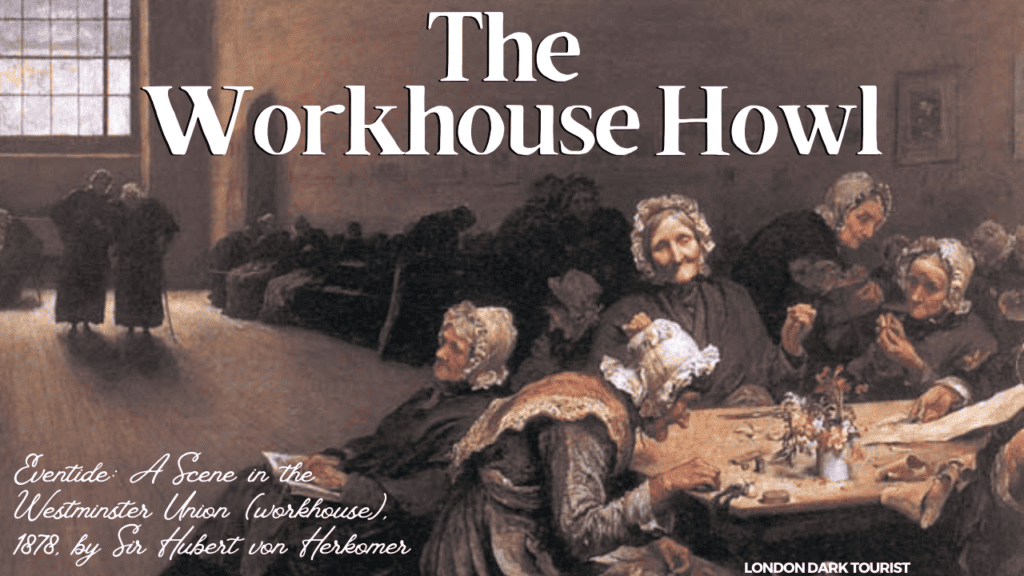
You can imagine that if you were living in these conditions, you would howl, too.
Not only were your children and spouse taken away from you, you were now a “pauper”: the lowest of the low in British society, with no hope of having a normal life ever again.
The workhouse howl was born out of this absolute pain and hopelessness.
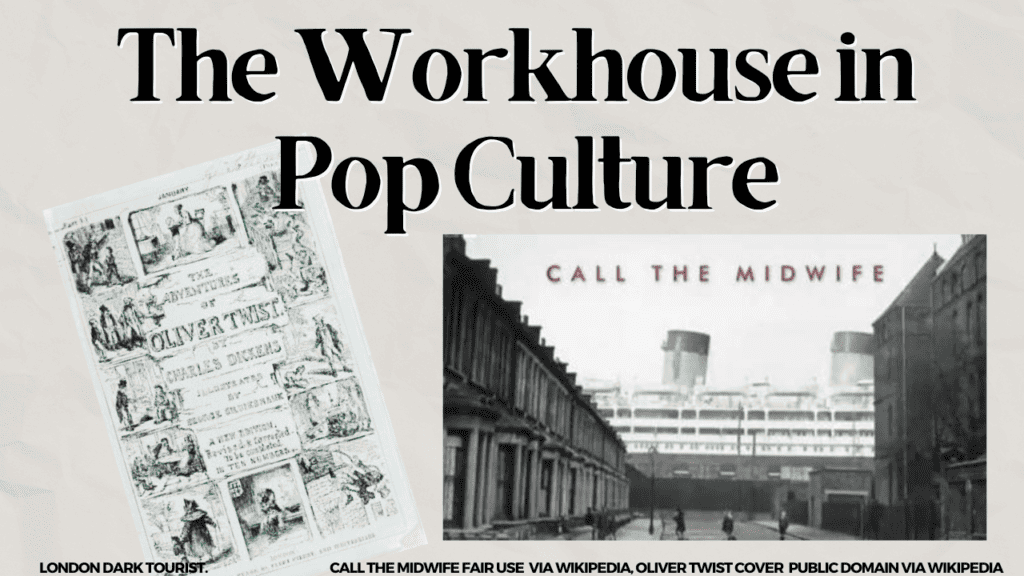
Jennifer Worth wrote about her encounter with the “workhouse howl” in her book “Call the Midwife,” later made into the iconic TV series. In the 2012 Christmas special, we met “Mrs. Jenkins,” one of the most memorable characters of the entire series.
Mrs. Jenkins went into the workhouse with her children and emerged all alone. Her children died there, and when we hear the “workhouse howl” coming from her tiny, dingy hovel, we can feel all the pain and despair it contains.
Worth’s story of the fictional “Mrs. Jenkins” was born out of a true encounter with the workhouse howl, a horrible reality of that era in the East End.
After the workhouse system was lawfully abolished in 1930, any remaining inmates were released after having spent their whole lives inside. Most emerged without their families.
Children in the Workhouse
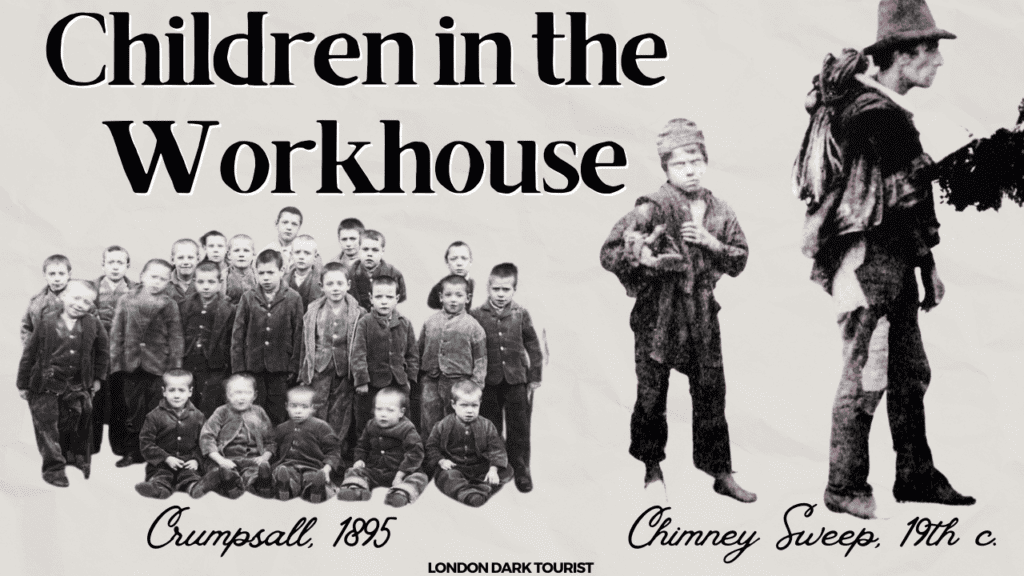
The story of Mrs. Jenkins and the workhouse howl is devastating, but not at all uncommon.
Children in the workhouse were separated from their mothers unless they were under 2 upon entry. After 2 years old, they were permanently separated. Families barely got to see each other, even while living and working in the same building.
By entering the workhouse, you forfeited any responsibility for your family. This was supposed to act as a deterrent to keep people out of the workhouse (and under the responsibility of the state), but all it did was put desperate families into even more desperate situations.
Some children of the workhouse were luckier than others. Some learned valuable trades in apprenticeships (that were not without their own risks) so they could go on to find employment.
Chimney sweeps and rat catchers were notorious for “borrowing” children from the workhouse to work for the day, as their smaller bodies were more fit for these dangerous jobs.
Many children were not so lucky. Disease ravaged workhouses, and coupled with malnutrition and general unsanitary conditions, many children died in the workhouse.
They died mere rooms away from their families, who sometimes were not even notified of their deaths.
If you think about Mrs. Jenkins and the workhouse howl in that context, you can imagine where the guttural, feral moan stems from: the ache a mother has for her child, to protect him, to take care of him, to hold him.
It’s absolutely devastating to even think about, and something we have a hard time comprehending in the modern age.
The End of the Workhouse Howl
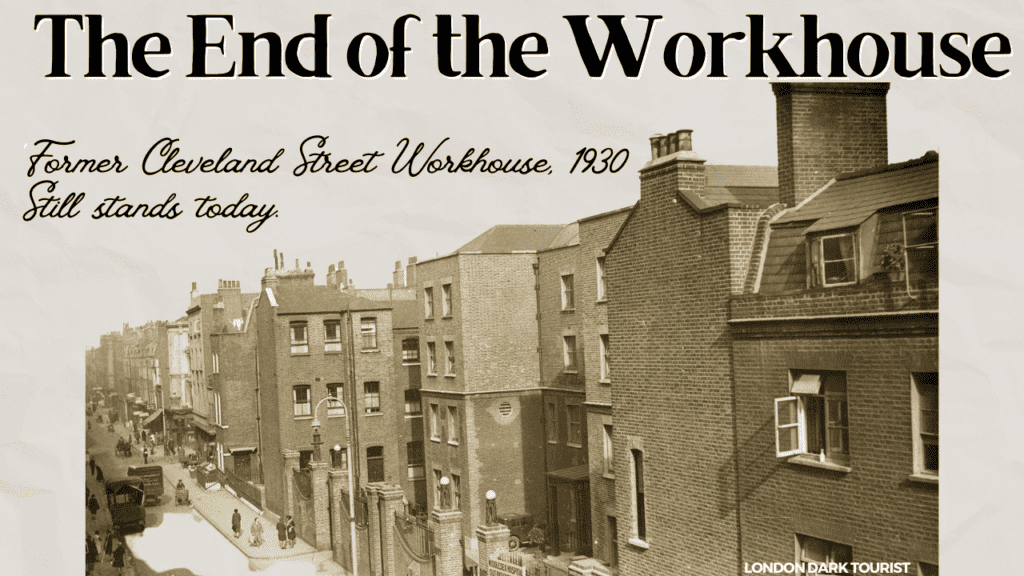
By the early 1900s, Britain realized that the workhouse system wasn’t working for anyone. Inspections revealed the appalling conditions inside, and laws changed to institute a new system for helping the impoverished.
Once the workhouses shut down in 1930 and WWII started, the old workhouses were often converted into hospitals, shelters for the unhoused after the Blitz, and given other uses.
Some of these buildings still stand today, notably the Cleveland Street Workhouse in Fitzrovia where Charles Dickens lived as a boy. You can also still see the remnants of workhouses in Bethnal Green, Bermondsey, and Holborn.
All that remained after the abolition of the workhouse system was a lifetime of trauma, heard in the echoes of the guttural workhouse howl.
Workhouse Depictions in Pop Culture: the Best Documentaries, Films & TV Shows
Want to learn more facts on workhouses? I’ve got you covered.
This fascinating and devastating point in British history has been depicted in lots of TV shows and films, and there’s no shortage of great documentaries on the workhouse system.
Facts on Workhouses: The Best Documentaries and Docuseries
History Hit’s Timeline: Secrets from the Workhouse on YouTube
The Charles Dickens Show on BBC UK
Absolute History: What was Life Really Like in a Victorian Workhouse? On YouTube.
Jobs in the Workhouse Depicted on TV Shows & Films
Call the Midwife: The “workhouse howl” episode is S2 E0, or look for the 2012 Christmas Special.
Oliver Twist: the most famous depiction of a workhouse is in Dickens’ classic novel. If you’re not up for reading, you can stream the 2005 Ben Kingsley film. The story of Oliver twist was also made into a musical, so if you want a more lighthearted look at history you can attend ‘Oliver!’ the musical or stream the 1968 film version.
Alias Grace on Netflix: this is an enthralling show set in the workhouse with a murder mystery twist.
The Mill: 2013 TV series entailing children being taken away from the workhouse to labor in a mill.
Little Dorritt: Not technically set in a workhouse, but in a very similar debtor’s prison, this 2008 series is amazing. This is a good perspective on children in the workhouse.
Hetty Feather: 2015 adaptation of the story of an orphan at a foundling hospital, which were run very similarly to workhouses. This is a good perspective on children in the workhouse.
Sources
The Grim Almanac of the Workhouse by Peter Higginbotham
Voices from the Workhouse by Peter Higginbotham
Call the Midwife Series by Jennifer Worth
The Changing Face of the Workhouse, Historic England
More on London’s Dark History
Victorian Women: 101 Secrets of their Hidden Lives
Spooky Specters: 21 Ghosts of the Tower of London
Kray Walking Tour of East London: 7 Free Spots You Can See Today
London Serial Killers: 11 Documentaries on YouTube to Watch Now
What’s the Oldest Pub in London? 13 Curious Contenders
Gross Jobs in the 1800s: 10 Dirty and Dangerous Victorian Jobs
Bricks to Burberry: The 7 Worst Areas in London that are Now Super Posh
10 Ghastly Royal Deaths and What Happened to Their Corpses
London Charterhouse Square: Are There 50,000 Bodies Buried in this Lovely Garden?
Temple Bar London: Why did this London City Gate Sport Rotting Heads on Top?


