
Unearthing The Secrets Of The London Necropolis Railway
The London Necropolis Railway originated from some pretty gruesome happenings in the Victorian era.
Cemeteries were overcrowded, churchyards were overflowing with putrid human decay, and London had long ago reached its capacity for burying bodies.
But as it turns out, a railway line for dead bodies wasn’t exactly the answer to London’s problems.
Here’s the crazy history of the London Necropolis Railway: how it came to be, how it tried and failed, and how it all came to a sudden end.

The Necropolis Railway: Answer to a (Gruesome) Problem

In the early 1800s, London was bursting at the seams.
The population was skyrocketing, life expectancy was low, and epidemics raged rampant through the population.
At the time there were about 200 cemeteries in London, and they kept piling bodies into the same holes.
Every year there were an estimated 20,000 adults and 30,000 youths and children being interred at the same small local churchyards and burial grounds.
The total estimated capacity for bodies in ALL of London was only 100,000 people.
With bodies piled on top of bodies, the graveyard level kept rising and rising, and the stench and decay grew worse and worse.
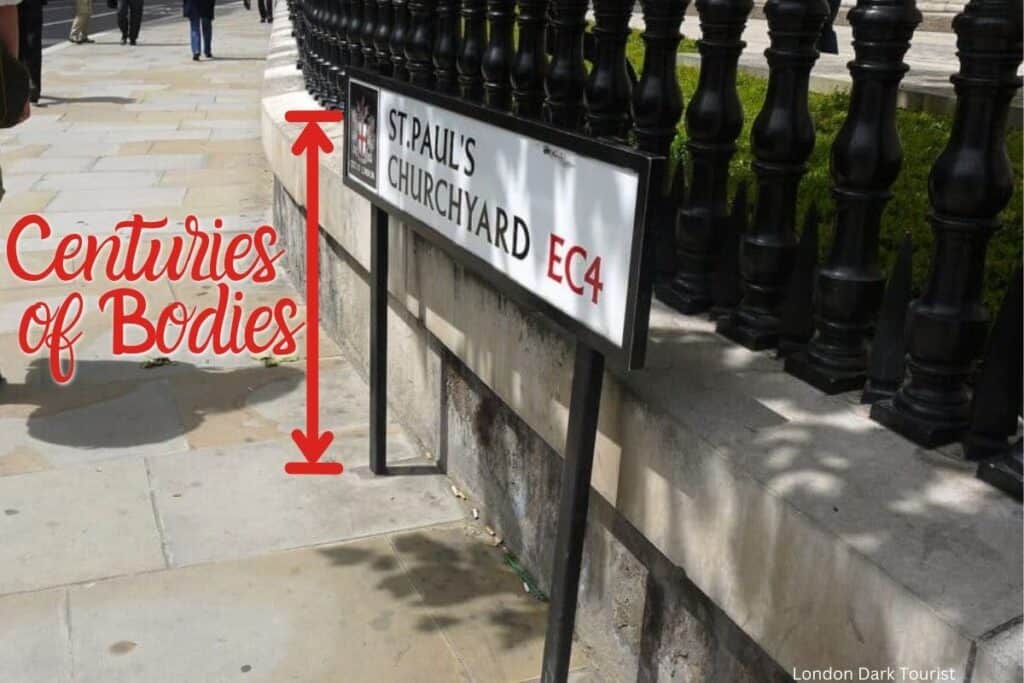
Even today, you may notice that many London churchyards are not level with the street–there are usually a few steps up; you’re stepping up over centuries of bodies.
Victorian Burials: A Deadly Problem
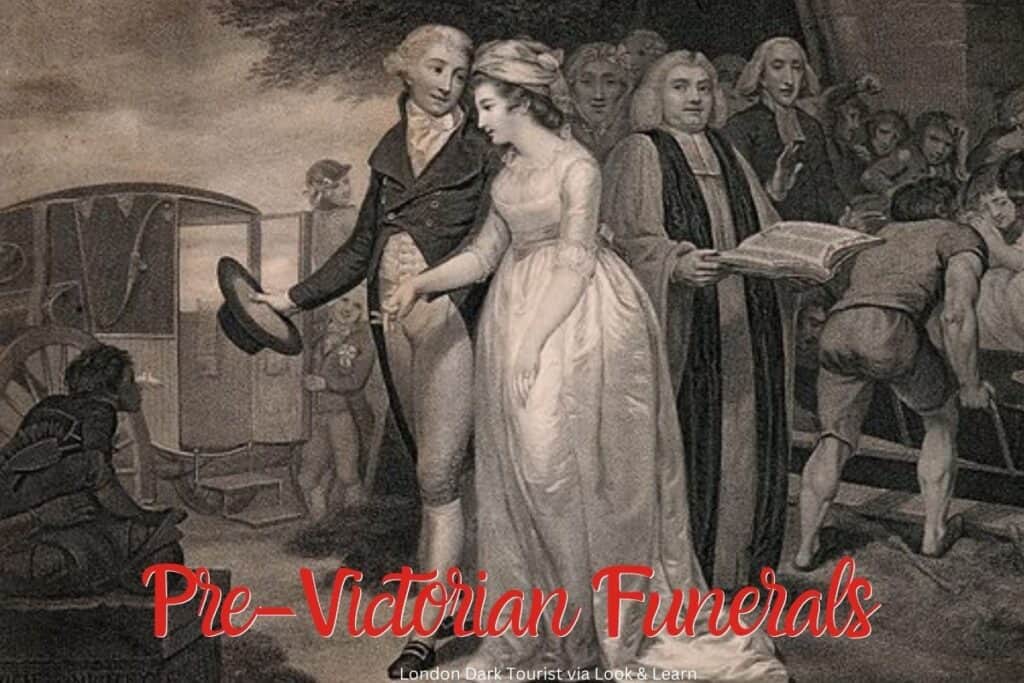
The stench in these churchyards and graveyards would have been unbearable.
It got to the point where women, with their “delicate sensibilities,” would not accompany the procession to the graveyard.
Even if it was a close loved one, they would stay inside their carriage and mourn from afar.
Rats and maggots inhabited every nook and cranny of the burial grounds, as bodies were buried whole. No embalming was happening if a body was only to be put in the ground anyway.
Disease swept through London at a breakneck pace, leading to plagues of cholera where water became tained with decaying bodies and vermin.
With the miasma theory of disease, the Victorians believed that it was the smell – and not the contents – of the graveyards that was making people ill.
The Burials Act

In 1852, burials within the city limits were outlawed (except for royalty). This was the very first instance of modern sanitary measurements in London.
But now that burials within the city were banned, what were Londoners to do with the neverending collection of bodies?
A few decades earlier, they had begun working on this problem.
London had begun building the Magnificent Seven Cemeteries in the 1830s. These burial grounds were on the outskirts of London, and offered plenty of space for plenty of new graves.
The only problem? They filled up almost immediately.
London once again had a massive burial problem.
London Necropolis Railway: 1854

The newly-created London Necropolis Company proposed something to lighten the load on the Magnificent Seven: a massive cemetery big enough to hold all of London’s dead in 2,200 acres.
They needed a massive amount of land to hold London’s massive number of bodies.
But to get that much land, they had to build quite a ways out of London: 25 miles away – to be exact – in Surrey.
Brookwood Cemetery was proposed, and the land was purchased and developed.
One problem remained: how would they get the bodies, and the mourners, 25 miles away?
The Necropolis Railway is Born

Leasing land from Southwest railway, they proposed and began to build a line from Central London to the new Brookwood Cemetery in Surrey.
The new station was simply called “Necropolis Railway Station,” and had all the facilities necessary to carry bodies and mourners to the new graveyard.

This purpose-built railway station had a hydraulic lift to get coffins into the train carriages.
It also featured waiting rooms, where funerals could be held for those who couldn’t accompany the body to the Brookwood station terminus.
The waiting rooms and the carriages were segregated by class, both for the living and the dead, with tickets varying in price for services offered.
First Class, Second Class, and Third Class Carriages & Funerals

Different people paid different rates for the Necropolis Railway, and tickets were offered in three classes.
The Victorian class system was rigid, and this sadly didn’t end after your death.
For mourners (live passengers), a first class ticket was about 6 shillings (about £25 in today’s money), and 3rd class ticket was 2 shillings (about £8).
For the dead bodies and their burial service (which did not include a headstone), you could choose first class funeral for £2.10 (£240 today), a second class funeral for £1 (£100 today), or a third class funeral for 2 shillings and sixpence (£10 today).
The third class funerals were a basic burial in communal ground, and this was usually paid for by the parish in which the deceased resided.
Each train carriage was also divided by class, so the “paupers” wouldn’t be able to mingle with the rich.
The New Cemetery: Brookwood Necropolis Railway

The Necropolis Railway trains departed once a day, leaving at 11:40 am and returning to London at 3pm.
The cemetery itself was split into two sections: anglican or other Church of England religions, and non-conformist (i.e. everyone else, including Muslim and Sikh, which was quite revolutionary for the era).
The anglican chapel side had a pub that would also cater the funeral, and also attracted visitors from London to have a wander around the graveyard and have a tipple.
A Big Gamble and a Big Loss for the London Necropolis Company

The Necropolis Company bet it all on this massive new venture, but it didn’t prove as popular as they wished.
They had competition in the new magnificent seven, and many Londoners didn’t want to be buried 25 miles from their city, so they chose a spot closer to home in one of the seven.

The motor hearse was introduced after the dawn of automobiles, which also made the train less popular. Mourners didn’t all have to get on a train – they could simply put their loved one in a car and bury them closer to London.
WWII Marks the End of the Necropolis Railway

The Necropolis Railway was slowly fading from Londoner’s consciousness. The company was bleeding money. They had survived WWI, but WWII would mark the end of the line: literally.
Waterloo was bombed during April 1941, destroying the Necropolis Railway Station and the line connecting it to Brookwood.
The train line was soon officially declared closed. At this point they’d only buried about 200,000 people – much less than anticipated.
Brookwood Necropolis Railway: The Cemetery Today

Today Brookwood Cemetery is still open and you can still be buried there, though your coffin will have to take a motorcar.
It’s the largest cemetery in the UK and has only grown through the latter half of the 20th century, despite the railway’s disappearance.
If you do visit, look for this last remaining piece of the railway, marked with a sign commemorating the railway and the history of Brookwood.
The Necropolis Railway Station at Waterloo Today

In 1902, the Necropolis Company expanded to a second address down the road at 121 Westminster Bridge Road.
The original Necropolis station and headquarters sat at number 188 across the street, but was destroyed in WWII and then town down.
The facade of the company’s second location is still intact, and quite beautiful in a grand, gothic way.
When the gates are open, you can still see the original tiled ticket hall where mourners would gather and wait for the train.
More on London’s Dark History
Kray Walking Tour of East London: 7 Free Spots You Can See Today
London Serial Killers: 11 Documentaries on YouTube to Watch Now
What’s the Oldest Pub in London? 13 Curious Contenders
Gross Jobs in the 1800s: 10 Dirty and Dangerous Victorian Jobs
Bricks to Burberry: The 7 Worst Areas in London that are Now Super Posh
10 Ghastly Royal Deaths and What Happened to Their Corpses
London Charterhouse Square: Are There 50,000 Bodies Buried in this Lovely Garden?
Temple Bar London: Why did this London City Gate Sport Rotting Heads on Top?


