
The Tragic Love Story of Joe Orton and Kenneth Halliwell
In 1967, on a quaint street in the quiet London borough of Islington, one of the most infamous London murders of the era would take place.
The victim? Local writer Joe Orton.
The perpetrator? His lover and partner, fellow artist Kenneth Halliwell.

***Trigger Warning: This case involves domestic violence, murder, and suicide.***
Joe Orton: Playwright, Author, Brilliant Artist

Joe Orton was an English playwright and author, born in 1933 in Leicester, England.
He had a somewhat idyllic childhood in the countryside, and remained close with his parents and younger siblings throughout his life.
He became famous in the 60s for his controversial and darkly comedic plays, which challenged social norms and conventions of his time.
Orton’s most famous works include “Loot,” “What the Butler Saw,” and “Entertaining Mr. Sloane,” all of which were staged in the mid-1960s.
His star quickly rose to become one of the most famous playwrights in all of London.
Kenneth Halliwell: Artist

Kenneth Halliwell was born in 1926 in Bebington, near Liverpool.
Severe trauma impacted his childhood. When he was 11, he witnessed his mother’s quick and tragic death from a wasp sting in the family garden.
At 23, his father completed suicide by gas oven. Kenneth was the first to find the body the following morning, and he “stepped over the body, put the kettle on, made a cup of tea and had a shave” before he reported the death.
Kenneth inherited the family fortune, as well as debilitating trauma and mental health issues.
Defacing Library Books to Islington Murders
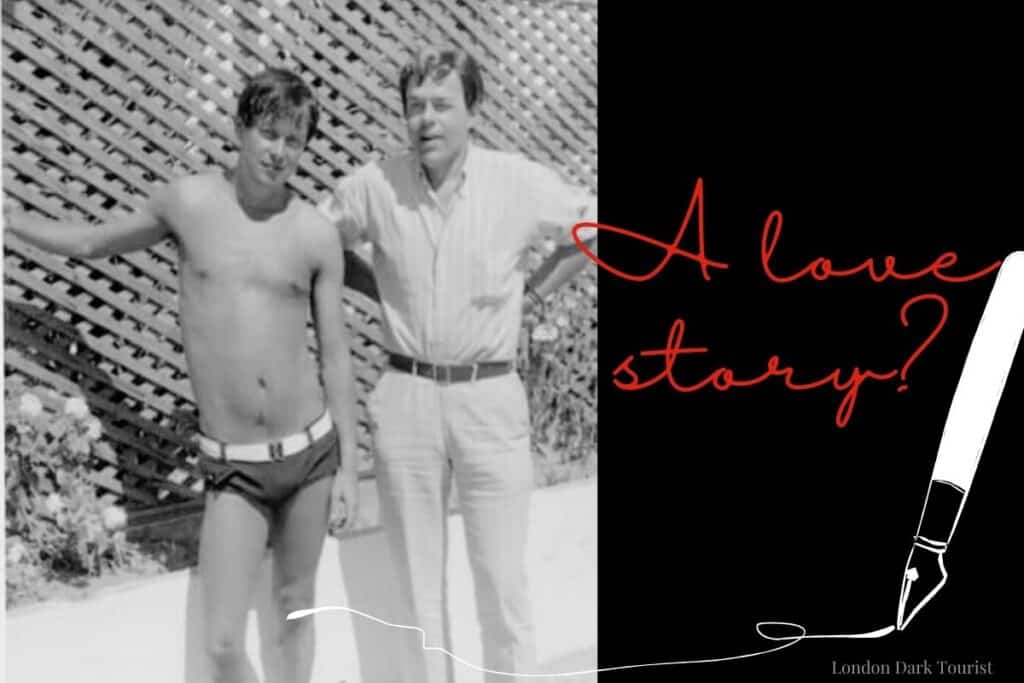
The pair met in 1951 in London when they both attended the Royal Academy of Dramatic Art (RADA).
Both struggling actors and writers, they hit it off immediately and began their fateful relationship, quickly moving in together.
The pair were known for their dark and provocative humor. They took a fancy to stealing and defacing library books, then returning them with (hilarious) indecent images plastered to the covers.

On the cover of Emlyn Williams’ Collected Poems, for example, they inserted phrases such as “Knickers Must Fall,” “Up the Front,” and “Up the back.”
View more samples of their (brilliant) book cover creations here.
The pair were actually imprisoned for their library book pranks in 1962 for six months, a harsh sentence that would likely not have been imposed on straight men of the era.
Success, and Jealousy, Come Knocking

The two often collaborated on projects and influenced each other.
Orton’s writing style was shaped and improved with the help of Halliwell, and became known for its irreverence, wit, and unconventional subject matter. He often explored themes of sexuality, violence, and the absurdity of modern life.
His star began to rise exponentially after their prison sentence in the mid-1960s, and several of his plays were put on to rave reviews in the West End.

He even had a one-act ‘television play’ broadcast, and was becoming wildly successful.
Halliwell, however, was not doing well. He was jealous of Orton’s success, but even as the two had often worked together, only Orton was getting accolades.
Halliwell was on antidepressants and was abusing barbiturates and alcohol (not a good chemical combination).
He accused Orton of cheating, which may or may not have happened, and the two had blazing rows often. It all came to a head in the summer of 1967.
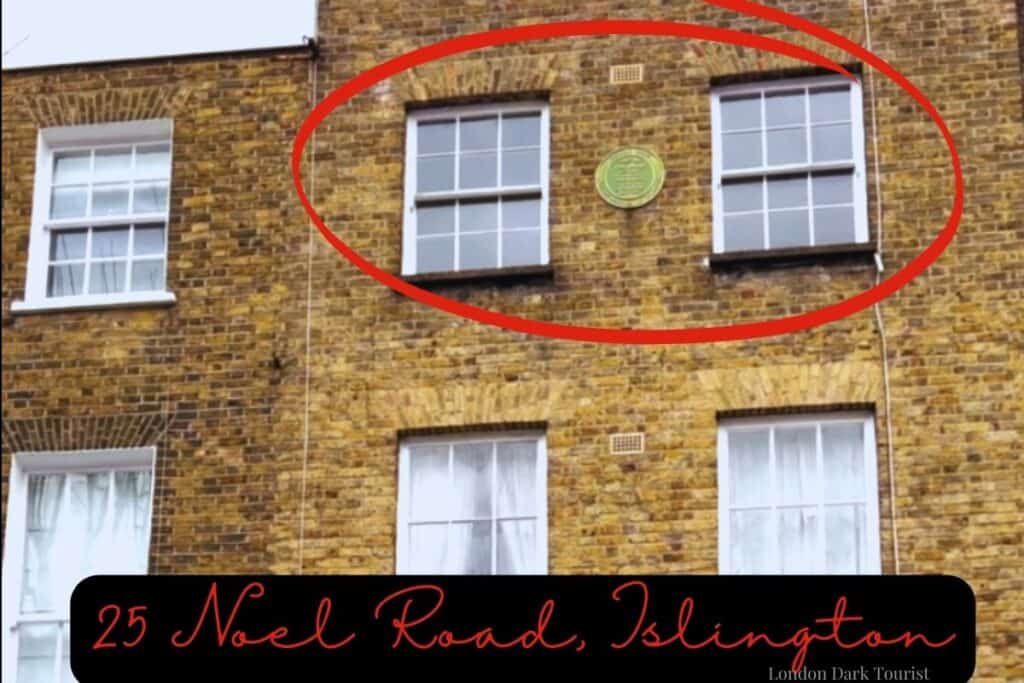
Joe Orton’s Murder: 25 Noel Road Islington

A few days before that fateful August 9th, 1967, Orton told a friend he wanted to end it with Halliwell but didn’t know how.
Halliwell was truly falling apart, and on the day of their deaths spoke to his doctor three separate times by telephone.
The last conversation was at 10:00 in the evening, when he ended the call with, “Don’t worry, I’m feeling better now. I’ll go and see the doctor tomorrow morning.”
The morning never came for either of them.
The Islington Murders: Discovery of their Bodies
The next day their bodies were discovered by a chauffeur who had come to collect Orton for an event.
Halliwell had struck Orton nine times in the head with a hammer, killing him instantly in his bed.
Halliwell then took an overdose of nembutal and collapsed next to Orton.
Their grieving families had their bodies cremated, and agreed (controversially) to mix their ashes together and spread them at Golders Green Cemetery.
There is no memorial marker.
The pair each had wills that left their estates to one another, creating a complicated legal situation for the families they left behind.
Remembering Joe Orton

This is such a sad tale. Both lives were valuable, both men had more to contribute to the world. Mental illness, trama, and addiction can cause so much damage, both visible and invisible.
Today, Halliwell and Orton’s former flat at 25 Noel Road, Islington, bears a green plaque to mark his life and legacy.
Burgeoning writers and actors come here to remember Joe Orton and his lasting impact on the theater community.
His groundbreaking plays are still studied and performed to this day, leaving a piece of him behind when his life was cut so brutally short by the man he loved.
But his largest legacy may be the impact he had on the LGBTQIA+ community, as he pioneered visibility, authenticity, and identity in an era that was brutally homophobic.
RIP Joe Orton. May we remember you with love.
We also remember Kenneth Halliwell, though he did a terrible thing at the end of his tragic life. Had he gotten more support, none of this may have happened.
(His former flat is is a private home, so please keep a respectful distance.)
Sources:
More on Macabre London
John George Haigh and the Acid Bath Murders
The London Necropolis Railway: Ghost Train to the Afterlife
4 Big Reasons Jack the Ripper was Never Caught
What’s the Oldest Pub in London? 13 Curious Contenders
Gross Jobs in the 1800s: 10 Dirty and Dangerous Victorian Jobs
Bricks to Burberry: The 7 Worst Areas in London that are Now Super Posh
10 Ghastly Royal Deaths and What Happened to Their Corpses
London Charterhouse Square: Are There 50,000 Bodies Buried in this Lovely Garden?
Temple Bar London: Why did this London City Gate Sport Rotting Heads on Top?
What are the Most Haunted Hotels in London? Here are 14 of the Spookiest


