
10 Worst Royal Deaths & What Happened to Their Corpses
The English monarchy has had some Royal shake-ups recently, with the death of Queen Elizabeth II and the recent news that her successor, King Charles III, has cancer.
But in the grand scheme of Royal history, these don’t even come close to the worst royal deaths.
They’re sad, sure, but in the bloody history of England, kings have been stabbed on the toilet, beheaded, exploded, and their decapitated heads used as footballs.
Here are the worst royal deaths in English history, and what happened to their bodies afterwards.
1. Worst Royal Deaths: Stabbed on the Loo
King Edmund Ironside only got to sit on the throne for a very short 6 months, from April 23rd April to November 30th, 1016.
His end was bloody, and it unfortunately involved a very different kind of throne. Of all the kings that were murdered, this one is the most ironic.
Edmund Ironside, 990-1016

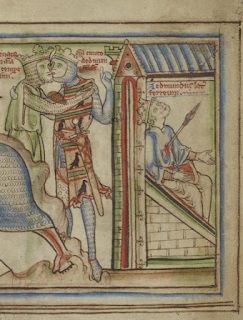
Edmund ascended the throne after his father’s death. His dad, Æthelred the Unready, was universally despised in the kingdom for his lack of leadership and general cowardice.
His son’s ascension gave hope toward success in the many battles going on at the time, but that hope would soon turn to sorrow.
On November 30, 1016, Edmund got up to use the privy in the night whilst staying in Oxford. At this point in history, a privy fit for a royal was nothing more than a wooden seat over a pit.
But Edmund wasn’t alone with his bits hanging over that hole.
Underneath him was an assassin, who may have been the son of his rival, but may have been someone else.
Whomever it was, they stabbed him up the backside while he sat on the loo.
Edmund died from his wounds, and was buried at Glastonbury Abbey in Somerset. The Abbey, however, was destroyed during the reformation in the 16th century under Henry VIII (you can visit the ruins).
The location of Edmund’s remains is unknown to this day.
2. Most Explosive Royal Death: Pierced by a Saddle Pommel, then Popped
William the Conqueror’s ascension to the throne was a rare one. He was also called “William the Bastard,” as he was an illegitimate son.
Not everyone was happy that this “bastard” was on the throne, but he had a decently long reign of 21 years before an unfortunate accident ended his life.
William the Conqueror, 1028-1087:
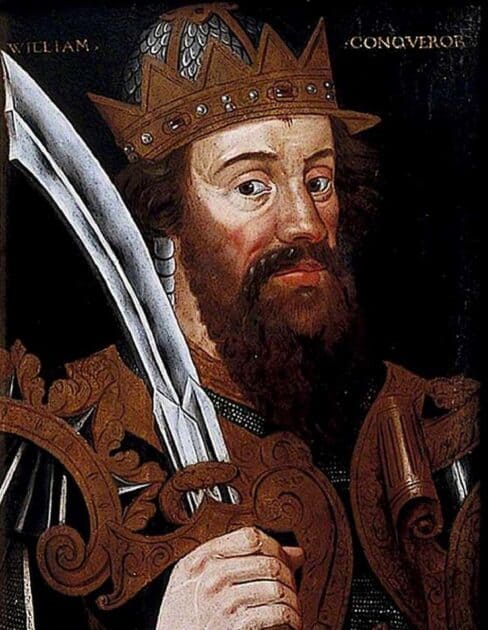
William I’s royal death happened on September 9th, 1087 in Rouen, France, after he was injured internally by the pommel of his horse’s saddle.
He left behind his hot mess of a family who were all quarreling and scrapping over their inheritance and the throne.
They were so preoccupied that they kind of…forgot to bury their father.
It’s probably more accurate to say that they ignored burying their father because they all hated him. He was kind of a jerk.
The church eventually took matters into their own hands, and had the body sent to France to be buried in accordance with William’s wishes.
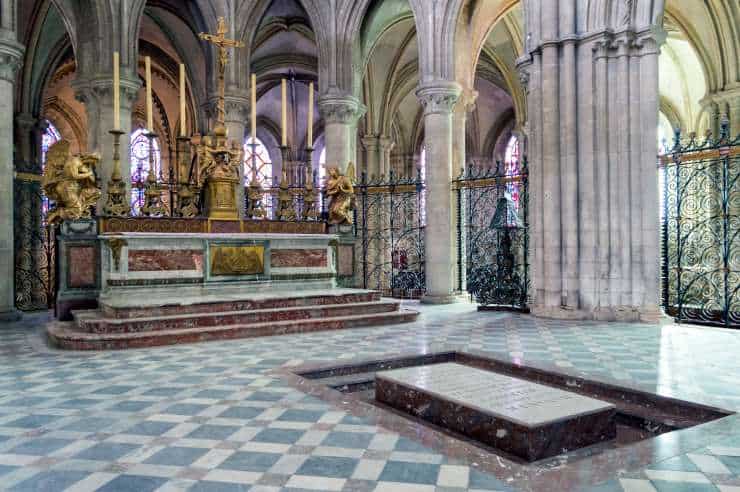
By this point his body had been sitting for over a week. When it was lowered into the sarcophagus inside the church, it didn’t fit because he was so bloated with decomposition.
But they kept pushing and pushing the body into the sarcophagus and…pop.
The King’s corpse exploded, sending putrid fluids spraying and noxious bodily gasses wafting through the church.
He is still buried in that spot in a tomb in the Church of Saint-Étienne in Caen, France. His smell is hopefully long gone.
That’s one stinky royal death.
3. Weirdest Royal Death: Ate Too Many Sea Creatures
Of all the disgusting royal deaths in English history, this has to be the weirdest one.
Son of William the Conqueror, Henry I came to the throne in 1100 after his older brother’s death in a hunting accident.
Henry I would become known throughout the kingdom as a self-indulgent ruler, and that trait would mark his end.
Henry I, 1068-1135: Death by a “Surfeit of Lampreys”
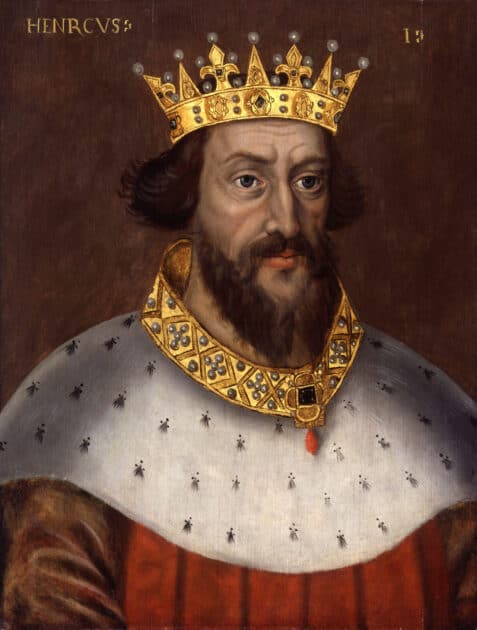
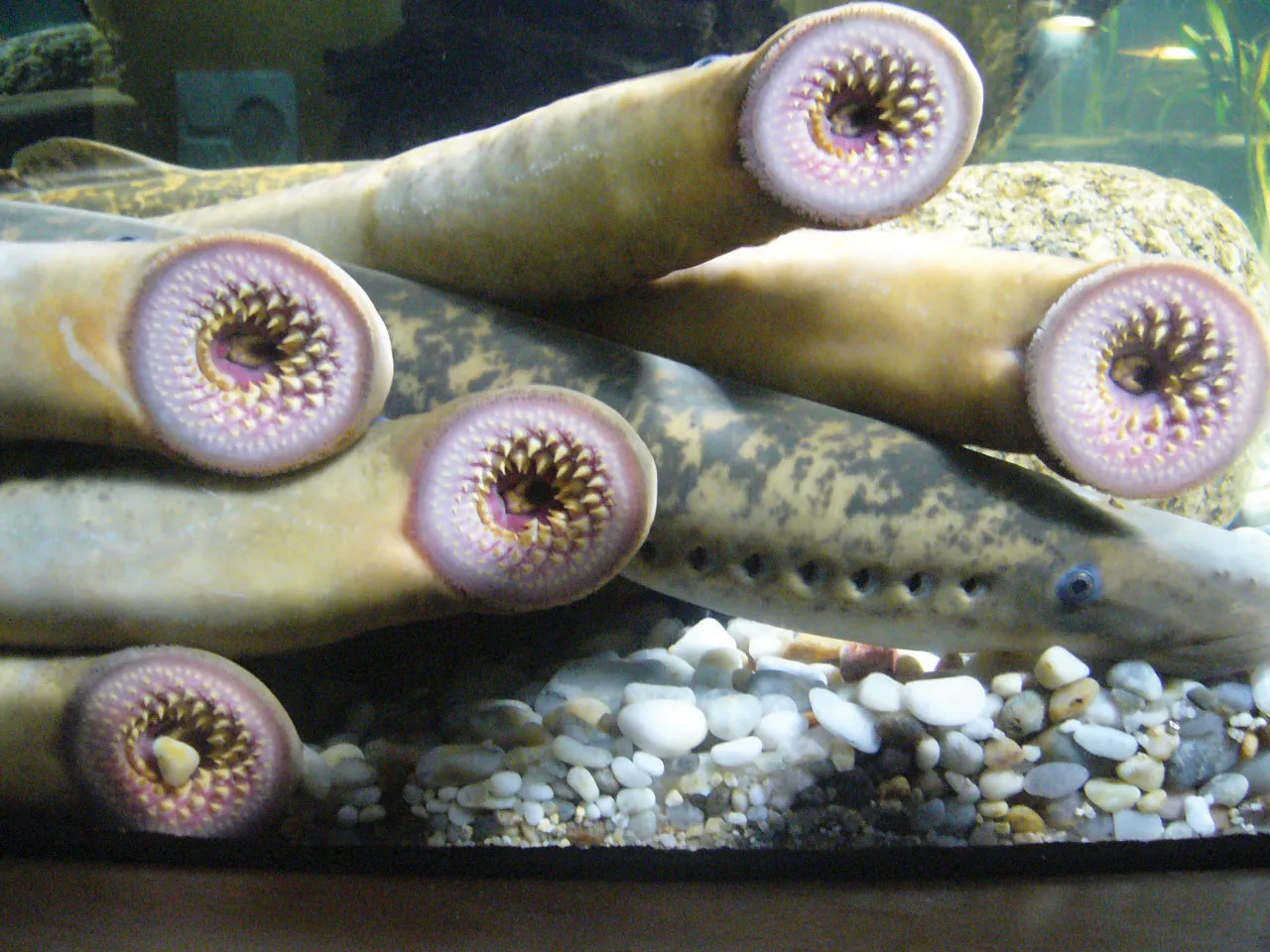
Henry I had a successful reign and achieved peace in the realm. He was happily living out his old age, and went on a trip to Normandy to see his grandsons.
He wasn’t in great health to begin with, and apparently really, really loved indulging in food and drink, including sea parasites.
On December 1st, 1135 he died after a week-long illness that was brought on by eating a “surfeit of lampreys”–too many slimy, toothy sea creatures that kind of look like eels.
His doctor had specifically warned him against eating lampreys, but apparently Henry just couldn’t keep away.
He probably didn’t die because of the lampreys themselves, but by some kind of intestinal infection.
Henry was embalmed and his innards (maybe with the lampreys still undigested?) were buried locally in France while his corpse was taken to Reading Abbey, which he founded years earlier.
Reading Abbey was later destroyed, but you can still see where his remains lie with a plaque marking the stony rubble.
4. Grossest Royal Death…and Maybe Royal Murder?
Of all the regicides in English history, this one is the most mysterious.
King John was likely the most hated monarch in history, and caused all sorts of chaos in the realm. His death would be just as chaotic.
King John, 1166-1216: Dysentery
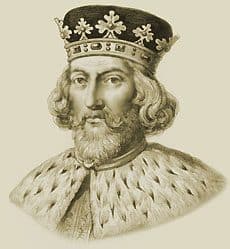
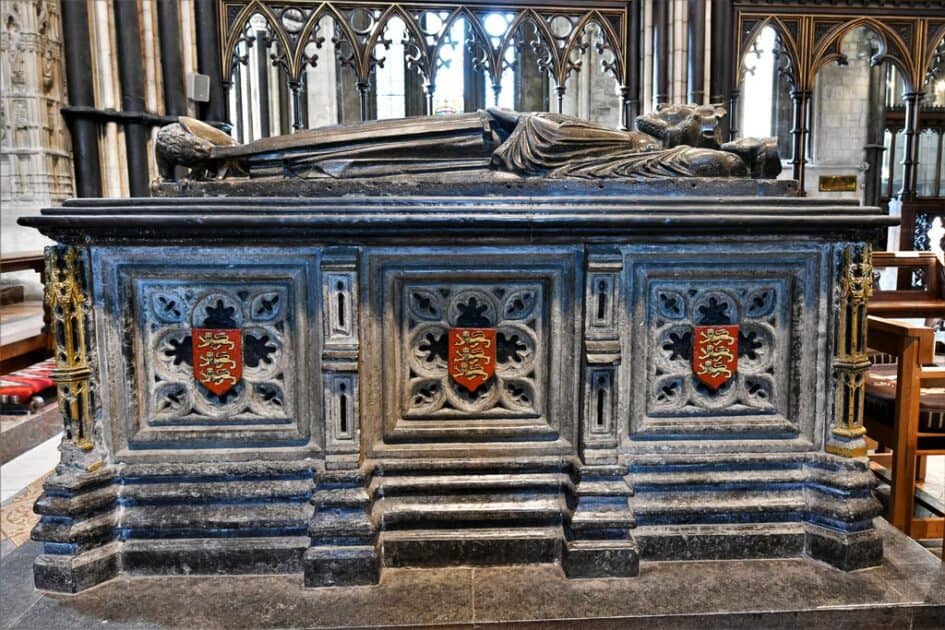
The inspiration for the villain in Robin Hood was finally taken down in 1216 by…diarrhea.
But did poison cause the stomach ailment? If anyone were to plot the murder of a king, it would be this king.
In 1216, John was on the run with his now very small band of followers. According to the Brut Chronicle, John stopped for a few days’ rest at Swineshead Abbey and deeply offended a monk who lived there.
At dinner, the King asked the monk how much a loaf of bread cost. The monk told him, and John replied that if he would have been allowed to continue his rule, he’d push the price of bread to 20x that so the rich could get richer.
The monk knew it would mean starvation for half the country if King John stayed on the throne. So he (supposedly) took action.
In the garden, the monk found a poisonous toad, and squeezed the toad’s toxins into a wine glass. The monk knew he’d have to imbibe, too, in order for the King to drink what he supplied. Imbibe they both did.
The monk passed quickly in the abbey’s infirmary, but King John went more slowly over the course of a few days. His stomach became so bloated that he had it bound to try to relieve some of the pain.
It didn’t work. His…discharge…became violent, and the King passed in October of 1216.
Was this a regular royal death or in fact a royal murder? Who knows. But he really did die of diarrhea either way.
John was entombed at Worcester Cathedral, where you can still visit him today.
If you visit, maybe leave an offering for the monk who took action to prevent England from starving. Not that life got much better for peasants in the years to come.
5. Bloodiest Murder of a King
What is with the regicides in English history that involve stabbing a king in the bum?
Edward II ruled from 1307-1327, but his rule wasn’t ended by his death. Instead, he was forced to abdicate. And while he was imprisoned, a royal nightmare awaited him.
Edward II, 1284-1327: A Red-Hot Poker up the Bum
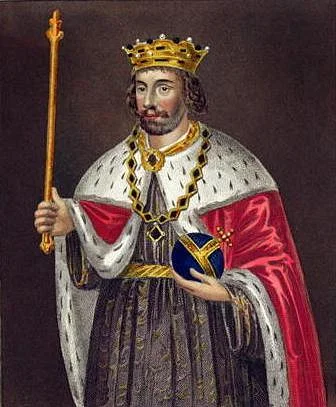

In 1327, Edward II was imprisoned at Berkeley Castle after he was forced off the throne.
His family and government were a dumpster fire of wars, squabbling and power struggles, but his wife Isabella of France (aka “The She-Wolf of France“) was the worst of them all.
It was never officially recorded how Edward died, but popular lore says that his wife and her lover plotted his royal murder at the castle.
They hired assassins to enter his cell on the night of September 21st, 1327, and they shoved a red hot poker up his backside and…swirled it around.
Whether or not this is true, we’ll never know. Each account of his death – whether it’s the murder of a king by hired assassin, or just a garden variety royal murder – varies.
He was definitely murdered; we know that. But how he was murdered is contested.
There were rumors that the King was gay and the red-hot poker was his wife’s final act of retribution. No one – no matter how shitty a King they are or how much they’ve cheated on their wife – deserves a death so brutal.
Edward II is buried in an ornate, gothic tomb at Gloucester Cathedral.
6. Longest Murder of a King
Richard II, as documented by Shakespeare, was a pretty shitty king. He mismanaged money, ruled arbitrarily, and banished anyone who didn’t support his rule.
He ascended the throne in 1377 and had a long and terrible rule of over 20 years before he met his slow and brutal end.
Richard II, 1367-1400: Starved to Death…or Murdered?
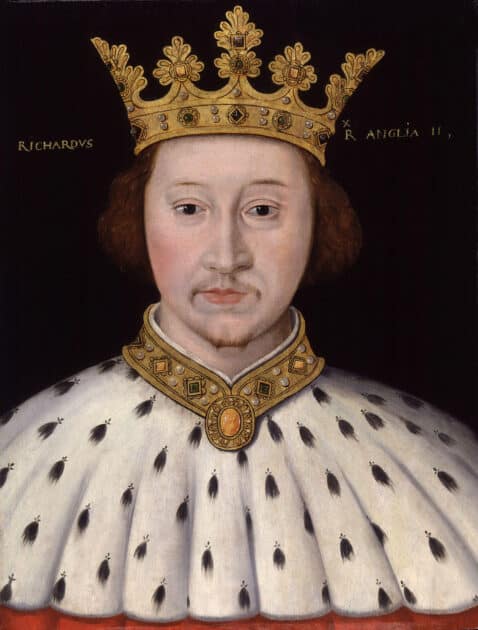
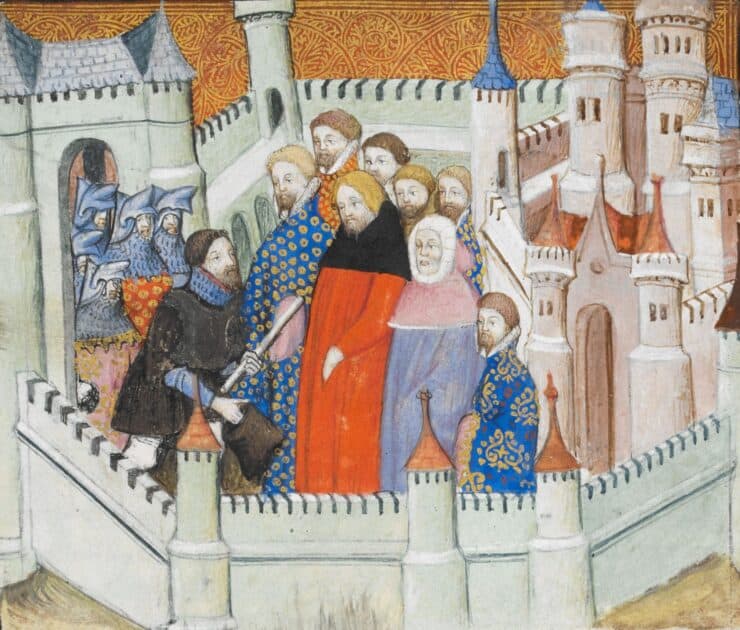
Henry IV captured and deposed him in 1399, and Richard was imprisoned in Pontefract Castle. He would never leave that castle.
Over the next year he was starved, which may have ended his life. But it also could have been murder by the order of his successor Henry IV. Records are unclear, so we may never know what happened to Richard II.
But his story doesn’t end there.
Rumors swirled all over the country that Richard was still alive. A man claiming to be the dead king came forth in Scotland, but Henry IV quashed those rumors by spreading his own.
He claimed this man was an impostor and mentally ill. But still the rumor mill churned, and since there is no record of Richard’s death or how he died, we may never know.
It’s odd that only Henry IV seemed to know for sure that Richard was dead. Was this the murder of a king by starvation, or something more sinister?
His son, Henry V, entombed Richard II’s body in Westminster Abbey. So he did, in fact, die at some point. He still lies there in the haunted Abbey.
7. Most Mysterious Royal Deaths
The most mysterious royal death on this list is definitely the most infamous.
Two siblings in line for the throne were taken to the Tower of London and never seen again. But it’s just coincidence that the man who put them there would become king…right?
The Princes in the Tower: Murdered by their Uncle?

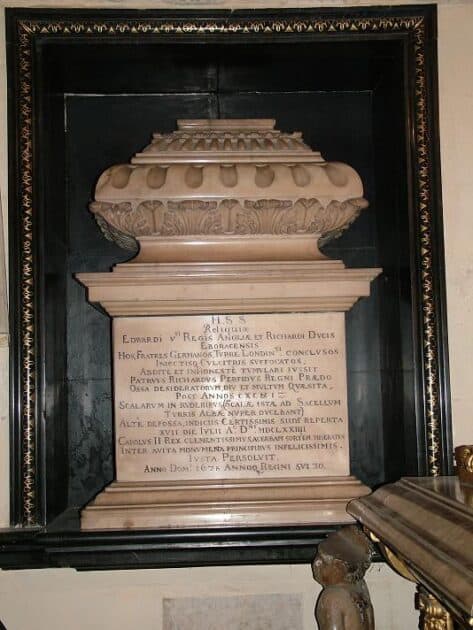
Edward V (age 12), and his younger brother Richard of Shrewsbury (age 9), were taken to the Tower of London for “safekeeping” after their father’s death in 1483.
Edward V would become the next king, and their imprisonment in the Tower by their uncle (Richard, Duke of Gloucester) was supposedly to protect him until his coronation.
That coronation would never happen.
Their uncle Richard had them declared “illegitimate” and took the crown for himself, becoming Richard III.
The boys were seen a few times after Richard’s schemes, but after that summer were never seen again.
In July of 1684, renovations to the Tower of London uncovered a wooden box containing two small skeletons. The skeletons were interred at Westminster Abbey, assumed to be the two lost boys.
In 1983, the skeletons were exhumed from the Abbey and examined. Authorities concluded that the bones matched the ages of the missing children.
With the dawn of DNA technology, the bones could have been conclusively matched. However, the late Queen Liz didn’t allow it to happen. Her son – now King Charles III – has said he would support DNA testing.
Will he? It remains to be seen. I think there’s more to this royal story than we’ll ever know.
It’s doubtful we’d be able to get a cause of death from old bones, unless there are obvious marks or injuries to the bones themselves.
Their remains are still interred in the Abbey, and there also is a plaque at the Tower of London marking the stairs under which the skeletons were found.
Was this the murder of a king, by a king?
8. Worst Royal Burial
The death of James IV wasn’t all that unusual: he died in battle. But what happened to his corpse was much more gruesome.
James IV of Scotland: Arrow through the Jaw; Head Used as a Football
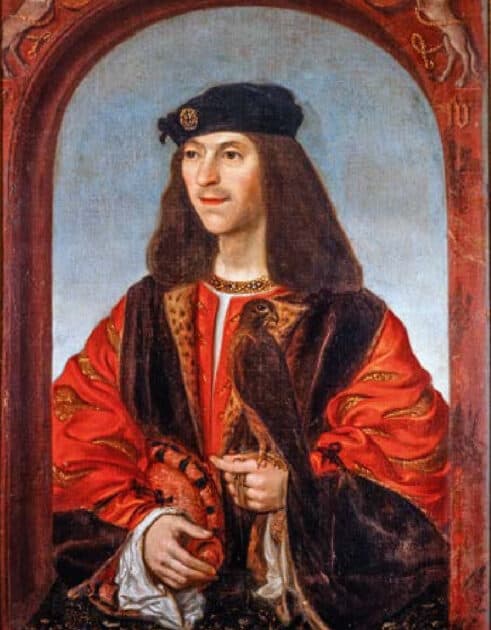

James IV was in battle with his men at Flodden, August 1513, and was killed when an arrow pierced his lower jaw.
After he fell, English troops surrounded and stabbed him, nearly severing his hand and slashing his throat. His body was found by his men the next day.
He was embalmed and taken to Surrey, where his body was in a kind of limbo. He had been excommunicated from the church prior to his death, so he couldn’t be buried in consecrated ground, which left very few options.
His coffin remained above ground in the woodshed of Sheen Priory, Surrey, which came into private ownership after Henry VIII dissolved all the monasteries during the Reformation.
In the later 1500s, his coffin was rediscovered during renovations, and workmen opened it up and allegedly played with his skeleton, kicking his head about in a game of football.
James’ head, it was claimed, was taken by Elizabeth I’s master glazier, Lancelot Young, who lived in the City of London on Wood Street.
Lancelot’s wife later insisted he get rid of the gruesome token, so he took it to be buried at Great St Michael’s Church, also on Wood Street.
Then that church was demolished, was a pub for a while, and is now a massive ugly office block with James’ head buried somewhere underneath.
What a wild ride for James and his skull.
The final drama? The coat James was wearing when he was killed in battle was sent to Henry VIII, who went on to use it as a battle flag at Flodden.
Moreover, James’ son was only 1 year old when he was killed, and was next in the line of succession, which caused a whole new pile of trouble for the Scottish throne.
9. Smelliest Royal Death
Of all of the nasty things Henry VIII is famous for, his smell is surprisingly not one of them.
But the King was very, very odorous, in life and in death. Here’s the story of how his corpse exploded.
Henry VIII, 1491-1547: Broken Legs, Ulcers, Gout, Gangrene and…Exploded
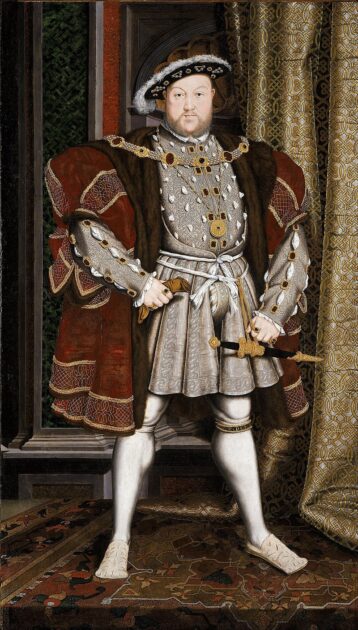
Henry VIII wasn’t a healthy dude to begin with, and after a jousting accident where his legs were crushed by horses, he really began to deteriorate.
His legs healed badly, making walking difficult. They formed ulcers that had to be lanced and drained regularly. He sat. And ate. And got drunk. And didn’t wash. And gained 200 pounds.
He had gangrenous wounds and severe gout and his mind was going, too. He also likely had advanced syphilis which contributed to his mental deterioration.
In 1547, he died aged 55 at Whitehall.
Embalmers replaced his innards with sawdust and fragrant herbs (would rosemary really help the smell of decay?) and sealed his body in a lead coffin.
An enormous procession set off from Whitehall to Windsor, with the King’s body being toted in an ornate open carriage. Mourners lined the miles of roads to say goodbye to this terrible man (I honestly can’t believe no one plotted the murder of a King during Henry’s reign).
When the carriage stopped overnight in Syon Abbey, the body’s gasses had built up so much that the lead coffin exploded. It’s said that nearby dogs came to lick up the liquified King.
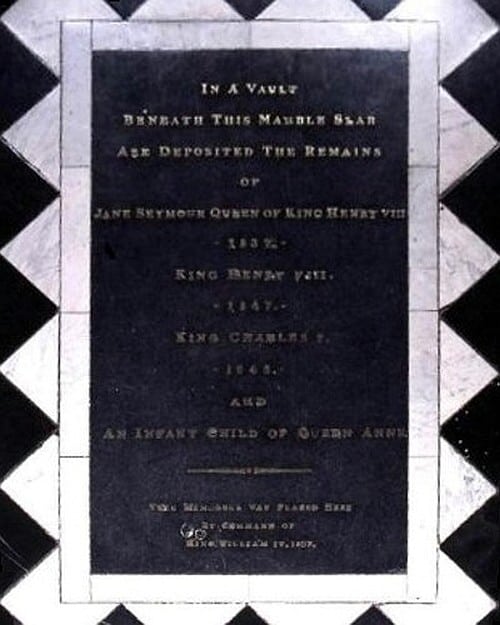
Attendants quickly soldered the coffin back up and hustled to Windsor, where Henry is still buried in a vault beneath St George’s Chapel.
There’s a marble marker on top, but you can’t see the actual coffin, which has deteriorated over the years.
At least it didn’t explode again?
10. Worst Royal Execution
Charles I wasn’t a beloved king, but he wasn’t hated, either. He was haughty and arrogant, and those qualities would lead to his downfall.
After starting the English Civil War, he was convicted of treason and sentenced to death.
Charles I, 1630-1685: Beheaded
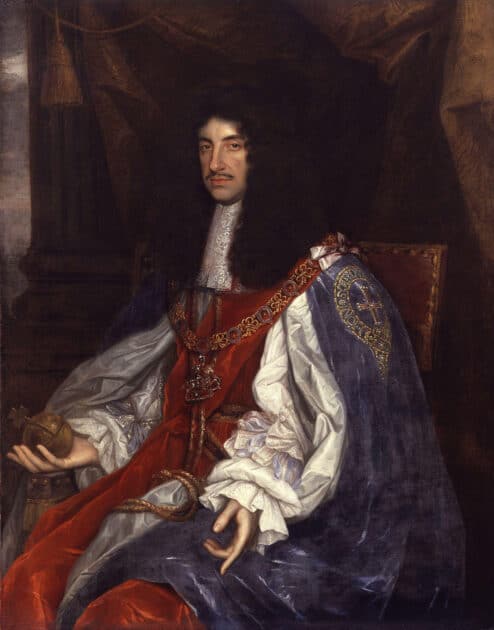
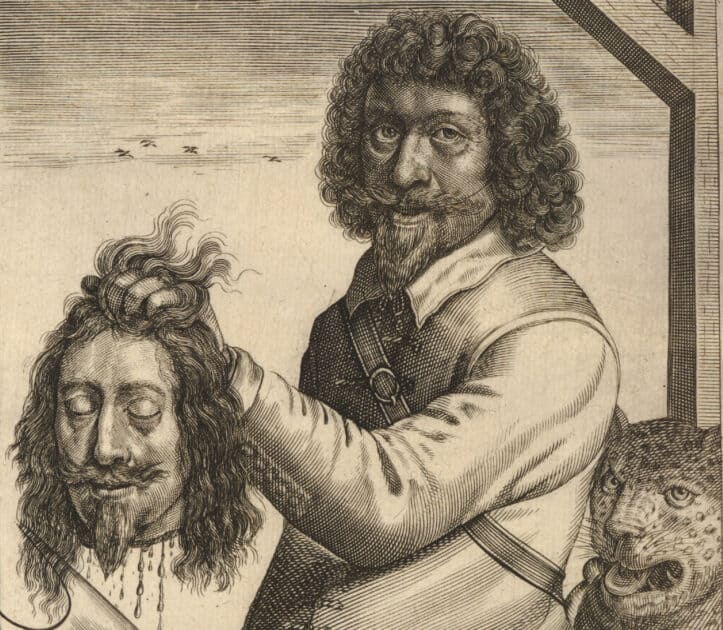
Charles I was executed outside the Banqueting Hall at Whitehall in 1649. On the scaffolding erected outside the palace, he placed his head on the block and bravely signaled he was ready.
The axe severed his head in one clean blow.
That’s horrific, but what happened after his death is particularly nasty.
The executioner, it was recounted, held up his head for the crowd to see, then dropped it, and the crowd swarmed to get a drop of his blood or a lock of his hair as souvenirs.
This account of the fate of Charles’ head is contested, and it’s pretty unlikely that the executioner dropped the head off the scaffolding into the crowd where someone could have run off with it.
His head is buried with his body, as was discovered in the 1800s when renovations were taking place at Windsor.
Another account recalls that Oliver Cromwell, the man most responsible for the King’s demise, came to look at his body, probably in satisfaction that his scheming worked.
To make sure the King was really, really dead, Cromwell stuck his fingers in the fleshy gap between the neck and shoulders and wiggled them around. Ew.
Charles I is buried at St. George’s Chapel at Windsor, in the same tomb as Henry VII and Jane Seymour. With his head. Unless workers decided to play football with it.
The Museum of London has an incredible collection of items from Charles I’s execution, including the tunic he was wearing still stained with blood.
Kings that Were Murdered, Executed, and Exploded: Final Thoughts
Which of the royal deaths on this list do you think is the absolute worst? Is it the red hot pokers in the bum, the severed head football, or the exploding corpses?
Let’s be thankful we no longer live in times where these types of deaths are a normal part of history.
I hope you enjoyed our wild ride through the worst royal deaths and royal murders!
More on Life in Historic London
The London Necropolis Railway: Ghost Train to the Afterlife
4 Big Reasons Jack the Ripper was Never Caught
What’s the Oldest Pub in London? 13 Curious Contenders
The Worst Neighborhoods in London that are Now Super Posh
Titanic Artifacts: The 11 Best Places Around the World to See Sunken Treasures
Titanic Museum Southampton: Tour & 9 Treasures of the Collection
London Charterhouse Square: Are There 50,000 Bodies Buried in this Lovely Garden?
Temple Bar London: Why did this London City Gate Sport Rotting Heads on Top?
London Necropolis Railway: 6 Shilling Ghost Train to the Afterlife
8 Quid for a Grave-Robbed Corpse: How the London Burkers Turned to Murder
The Moorgate Tube Crash: Why Did 43 People Lose Their Lives?


