
15 Horrific Victorian Jobs & The People Who Did Them
Victorian jobs for the lowest classes were absolutely horrific.
Victorian jobs for children were even worse, putting small kids in impossibly dangerous situations.
Luckily, there are many Victorian jobs that just don’t exist anymore, and that’s a good thing (especially the jobs in the 1800s that involved bodily fluids and corpses).
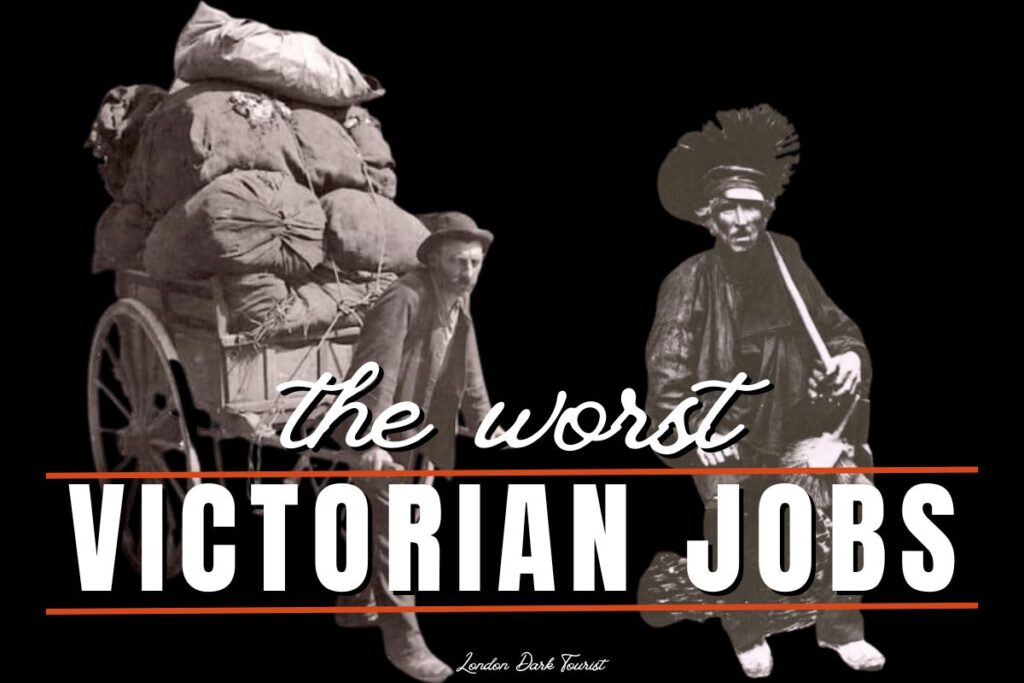
Here are the 15 worst Victorian jobs in London, most of which aren’t necessary anymore.
Stay tuned for the last one on this list, which is a difficult job which will–unfortunately–always be a part of society.
**TRIGGER WARNING: There are some medical illustrations that are a little gory below.**
Victorian Jobs for Children
These are the poor Victorian jobs that children often took up. The hours were long, the pay was low, and many were stuck performing this work until they died.
1. Chimney Sweeps

Quite the opposite of Mary Poppins’ cheerful Jack, Victorian chimney sweeps were mostly children, sold into the profession as “climbing boys” by their impoverished parents or taken from the workhouse.
Some were as young as three. Their “master sweep” wanted young, small, agile boys for climbing into the narrow chimneys.
The master had complete control over the young child’s life, and were compensated by the parish for teaching poor kids a trade.
Most were only bathed and had their clothes washed once a week. They were fed scraps and treated as slaves.
It was perilous: the child might get stuck, or cut, or burned, or suffocate. If they survived, they were constantly exposed to and inhaled coal dust, which caused cancer and lung disease, which they would eventually die of.
Protective laws were eventually enacted and as technology improved, the use of children as chimney sweeps eventually ended.
2. Mudlarks
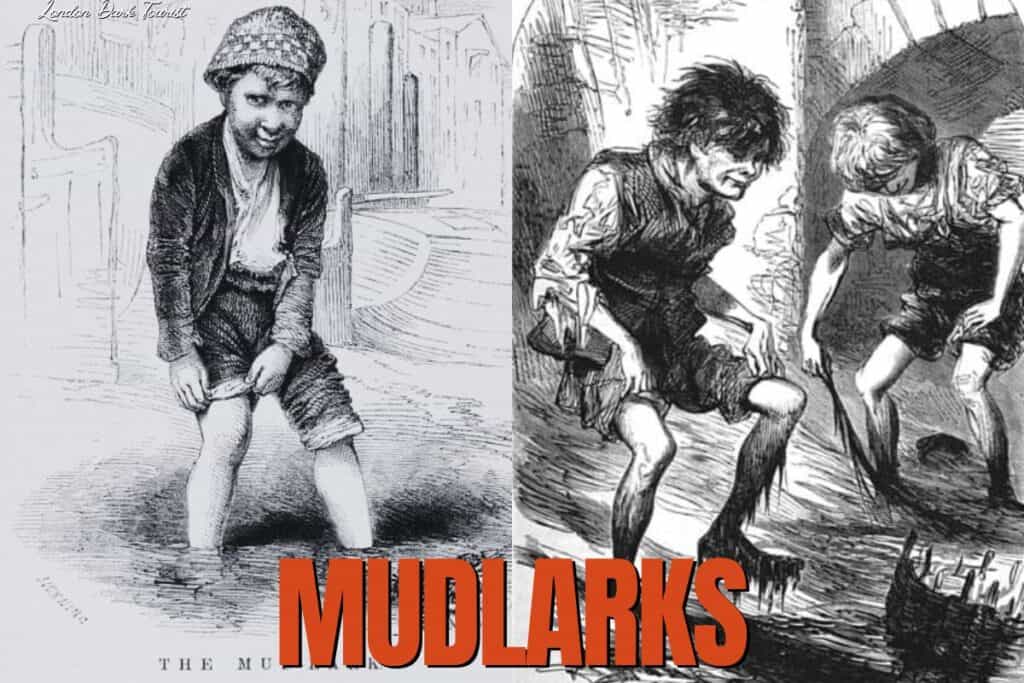
This is not the same mudlarking hobbyist of today’s Instagram; this was something altogether different.
Mudlarks of the Victorian era were mostly children, scrambling up and down the banks of the Thames searching for anything to sell on. It was incredibly dangerous.
The Thames was toxic – full of excrement, industrial chemicals, offal, and worse.
The tides were unpredictable and changed rapidly, sweeping many children away as they scrapped and scraped to survive this unimaginably hard life.
Moreover, these poor kids were seen as the lowest of the low. They stank, they were hungry, and they risked everything day after day for a small trinket to sell on.
3. Piecers
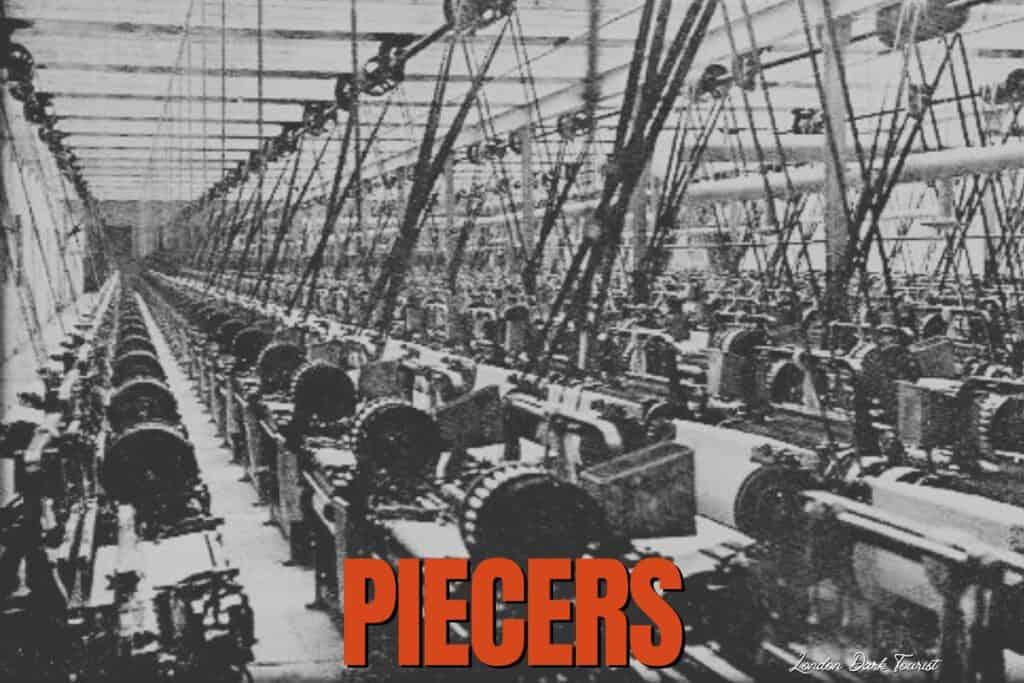
Children as young as 9 worked in massive textile factories as “piecers,” responsible for quickly tying broken threads together inside the machines.
These textile mills were loud, with constantly moving machinery. The piecers had to reach inside and tie the threads together quickly, lest their fingers get caught.
Pay was based on how many pieces of thread they tied together, so they had to be very fast and efficient if they wanted to be paid.
Many piecers lost fingers and hands from getting stuck in the machinery, and then were out of work altogether.
4. Mule Scavengers

Another children’s textile factory job, “mule scavengers” were employed for their tiny bodies. They would need to squeeze under and through the machine works of the spinning mule (the weaving machine) to collect fallen pieces of cotton.
Not only could they get crushed by the machine works, but the factory was also hot, dirty, louder than a freight train, and they worked horrendously long hours for very little pay.
Grossest Poor Victorian Jobs
These are the most vile and disgusting jobs that only the poorest of the poor performed. It was out of necessity, and the disease and danger came with the territory.
5. Leech Collectors
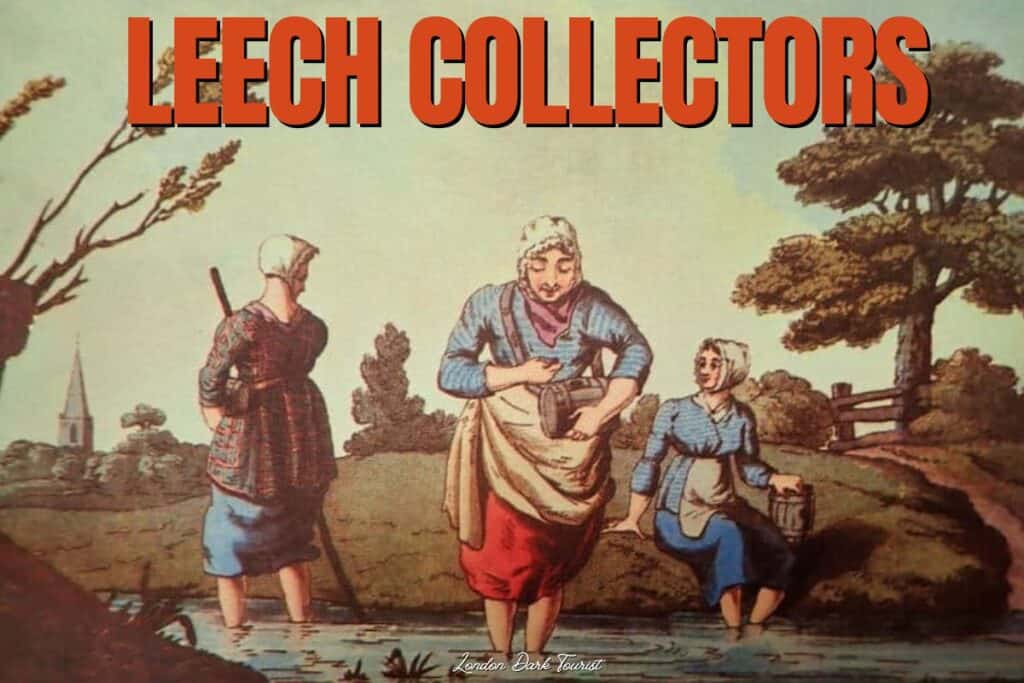
This horrid job was self-sacrificial.
Leech collectors, mostly women, took on this seasonal work by walking through bogs, marshes, streams and riverbeds, waiting for leeches to attach themselves to their own legs.
Once the leech had sucked enough blood, they could pluck them off and put them into a jar to sell to doctors.
Workers suffered extreme blood loss and contracted diseases carried by these little vampire worms. Plus, the leeches could then carry any diseases the worker had and pass them on to doctor’s patients.
Leeches are sometimes still used today (also see Call the Midwife Christmas special 2021 for a special leechy treat), but they’re cultivated in a lab and not hunted in marshes.
6. Pure Finders

This is a job we could still use in London, as no one seems to be able to pick up their dog mess.
“Pure” finders were dog poo collectors who picked through mess on the streets, and sold the poop on to tanners who used it in drying and curing leather.
The tanners rubbed it into animal hide which (counterintuitively) removed the smell of decay.
This was a decently lucrative job, and those who performed this work were seen as just as admirable as any other working class laborer.
7. Toshers
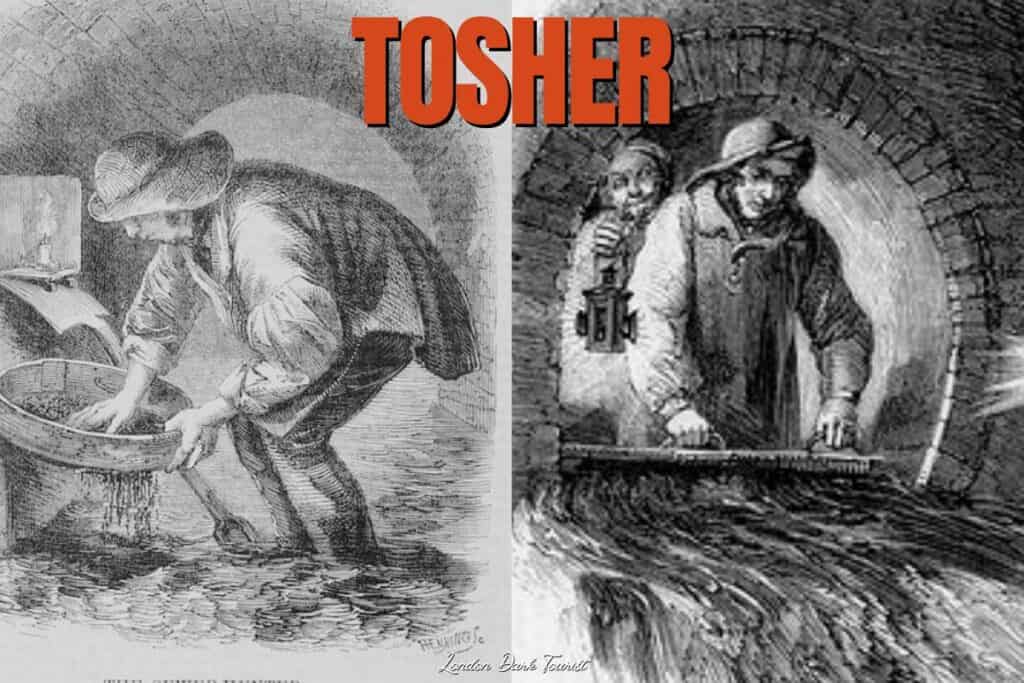
These sewer-pillagers would make their way into London’s sewers at low tide and pick through the excrement and murky water, hunting for “tosh”–anything they could sell on, copper being the most valuable.
After 1840, it became illegal to enter the sewers and police paid ransom to informants.
The toshers took to night work after that, which only made it more dangerous.
Toshers, surprisingly, sat in the upper echelons of the working class, making the equivalent of about $50 per day.
8. Matchstick Makers

Women and young girls made up the majority of workers performing this dangerous job, which involved dipping wooden sticks into heated phosphorus.
Many developed “phossy jaw” from the toxic fumes: necrosis of the lower jaw, including the teeth and sometimes tongue.
Moreover, most of these factories were essentially sweatshops where girls worked unbelievably long hours and were fined for sitting, going to the bathroom, or even dropping one match.
In 1888, workers at the Bryant and May factory in Bow, East London, had enough and went on strike, marching to Parliament.
They gained widespread public support, and even though conditions didn’t improve dramatically right away, they paved the way for women forming unions. We owe the matchgirls a debt of gratitude.
9. Rat Catchers

Rat catching could be lucrative, but you needed tools of the trade. Namely, a dog – usually a small terrier who could fit in tight spaces with a high prey drive.
Rat catching was usually performed by young adults or teens, and they could charge wealthy Londoners a pretty penny to rid their mansions of vermin.
They could either kill them with arsenic once they were caught, or sell them to rat-baiters, who ran gambling rings around pits filled with dogs and rats.
This job was not without its risks: rat bites could pass on diseases, infection, and even kill you. But if you had a dog, you could earn a decent wage.
10. Night Soil Men

In a packed city with no sewers for human waste, someone had to clean it up. And “night soil men” did just that.
Under cover of darkness, night soil men trudged into basement cesspools or outdoor privy pits and scooped the mess out by the bucketful.
Why “night soil”? Since Victorian London was still stuck in the miasma theory of disease, they had to work at night so as not to get people sick with the smell of shit during the day.
After they filled their carts with excrement, they either dumped them in the Thames (where the young mudlarks were trotting around barefoot) or sold it to farmers out of town as fertilizer.
This job was dirty, they often got sick, and were paid very little for such a gross, disgusting job. But someone had to do it.
Other Victorian Era Jobs
Here’s some poor Victorian jobs that were such a product of their time, and thankfully no longer exist today!
11. Rag and Bone Men

This Victorian job involved toting a cart, sometimes by a horse or pony if you were lucky, around the city streets searching for anything to sell on: rags, bones, glass and metal.
Sometimes they were also called “bone-grubbers” or “totters.”
Rags could be turned into paper or cardboard, and bones could be used for soapmaking or for forging knife handles and toys.
These men were known to be greasy and smelly, and typically lived in lodging houses where they kept their daily hoard to sort through.
They usually had a boss–a “master rag-picker,” who paid them a meager sum and went on to sell their finds by weight.
12. Resurrectionists

Also called “body snatchers,” resurrectionists stole bodies from graveyards to sell to anatomists.
Surgeons in training needed bodies to practice with, but too few were allocated to the colleges (only hanged criminals, of which there weren’t enough).
A massive black market operated underground in which resurrectionists snuck into graveyards, dug up bodies, and stealthily brought them to the surgeons.
Not only were they at risk of getting caught by the authorities, but they also only dug up fresh bodies, and exposed themselves to all manner of diseases.
There was such a shortage of bodies that some resurrectionists turned to murder, such as the London Burkers.
13. Picking Oakum
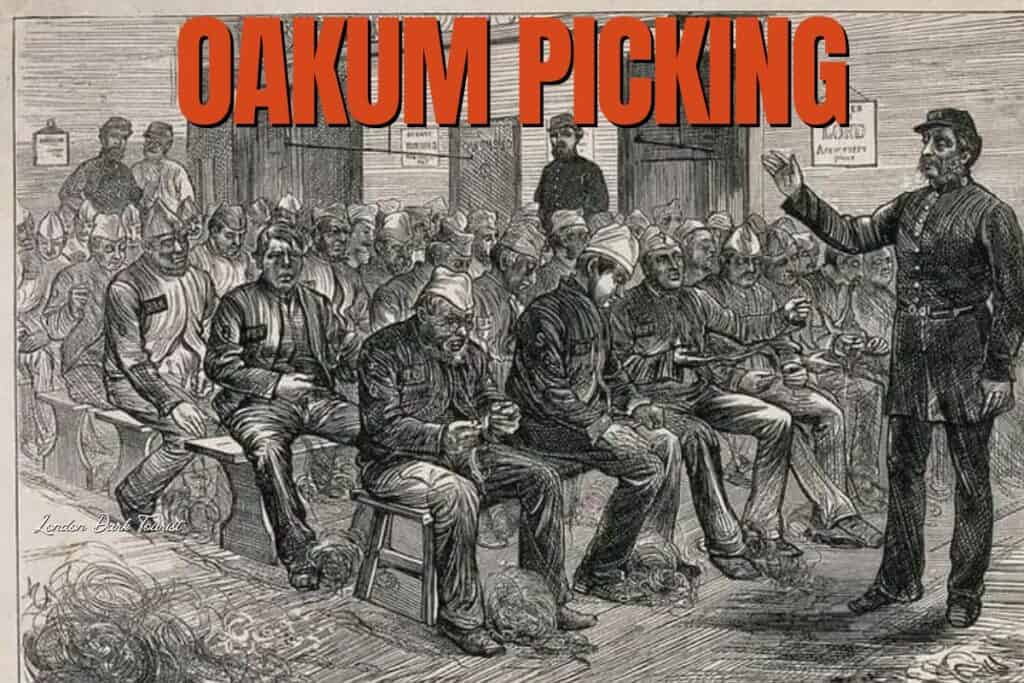
Oakum picking is a job thankfully long gone. It was the tedious task of picking apart old rope by hand to remove the oakum – tarred bits of fiber – which were used for caulking ships.
Oakum picking was a common workhouse and prison job, where you had to sit for 14+ hours per day working your fingers to the bone.
You were required to pick a certain weight per day or risk further punishment. Prisoners were already subjected to horrendous conditions in Victorian prisons, and had to pick pounds of tiny fibers or risk going without food or water.
The Absolute Worst Victorian Jobs
These last two Victorian era jobs were the worst of the worst. Once you started doing them, there was little hope of ever getting out alive.
14. The Workhouse

What began as a charitable endeavour quickly turned into prisons for the poor.
The Workhouse system began in the 1600s to help the less fortunate, but by the Victorian period was a vast system of prison-like structures where the poorest of the poor were housed.
The Workhouse was the last resort for those who couldn’t support themselves, but it did nothing to assist Victorian lives, and only enabled the cycle of poverty to continue.
Once you entered the workhouse, you were separated from your family and housed by gender and age. Young children were put to work, women were tasked with caretaking older people, and men were to perform manual labor like rock-breaking and oakum picking.
The horrendous history of the ‘Workhouse Howl’ stems from this barbaric system, where most people who entered left in a coffin, never seeing their families or children again.
15. Sex Work
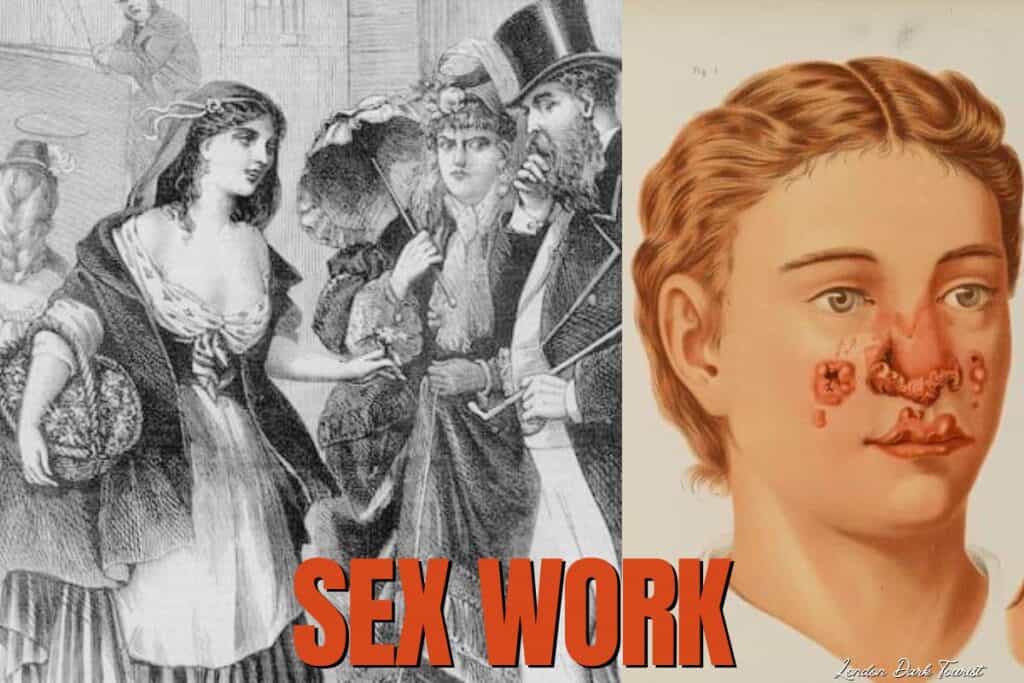
People who resorted to sex work (called “prostitution” back then–I don’t use that term unless it is in historical context) in the Victorian era didn’t have any other choice.
For Victorian women, there were few jobs, education was limited, and if you didn’t have a husband, you didn’t have a place in society.
If you had to choose between starving yourself and your children, or performing sex work, you would choose the latter.
Some were employed in upscale brothels, but most were on their own on the dangerous streets.
Brothels for men were especially rare, so men and young boys were more often on their own. But neither males nor females were protected by the authorities.
Not only could sex workers get beat up or murdered, but STIs like syphilis were common and most were untreatable.
For male sex workers–”rent boys”–violence and STIs were also devastatingly common.
One surprising cause of sex work was, in a tragic bit of irony: rape.
If a woman was raped in Victorian England, it was seen as a reputation-ruining scandal and not a crime. The victim was cast out, and often had nothing left but to sell her body, especially if she bore an “illegitimate” child from the rape.
Unfortunately, sex work is still a job, and has been since the beginning of time. But today, sex workers today have some protections. Still not enough, but some.
The Worst Victorian Jobs (Thankfully) Don’t Exist Anymore
Almost every occupation on this list of Victorian jobs is long gone. The last rag and bone man went out of business in the 1980s, night soil men were replaced with a comprehensive sewer system, and rat catchers were put out of business by London’s foxes.
The poor still struggle in London, and all over the world. But at least orphans don’t have to crawl down hot chimneys anymore, and there are more workers rights written into law.
We may pine for the days of quaint Victorian London, but as you can see by this list, the underbelly of the city was dark, dangerous, and absolutely horrifying.
More on Life in Victorian London
4 Big Reasons Jack the Ripper was Never Caught
The London Necropolis Railway: Ghost Train to the Afterlife
What’s the Oldest Pub in London? 13 Curious Contenders
What’s the Oldest Pub in London? 13 Curious Contenders
Bricks to Burberry: The 7 Worst Areas in London that are Now Super Posh
10 Ghastly Royal Deaths and What Happened to Their Corpses
London Charterhouse Square: Are There 50,000 Bodies Buried in this Lovely Garden?


